With Hamnet, Chloé Zhao delivers a masterfully shot and poetically written film worthy of the source material it weaves into its true story about William Shakespeare’s own life, marriage, and the making of his play Hamlet.
The film stars Paul Mescal as William Shakespeare and Jessie Buckley as his wife Agnes, with Jacobi Jupe playing Hamnet, while his older brother plays the on-stage fictional version of Hamlet in the play which is performed within the third act of the film.
What’s immediately astounding about the film is the gentler approach to filmmaking that Zhao employs. The soft and surreal musical score by Max Richter is played against the naturalistic and understated performances which transport to a historical setting that is at once tranquil and peaceful while being shrouded in grief, uncertainty and tragedy.

Most important here the way that cinematographer Łukasz Żal (the Zone of Interest) creates a tranquil setting by mixing sprawling outdoor landscapes with intimate interior settings. Scenes in Shakespeare’s home use high contrast lighting by candlelight that give the film a moody feeling, while incredibly picturesque wide shots of the lush green countryside create images that make you revel in the beauty and tranquility of the environment.
What’s more is that Zal uses a 1.66:1 aspect ratio, giving the film a boxier aesthetic that heightens the beauty of interior shots that showcase tall ceilings with the taller frame, or stunning outdoor shots that capture the lush tree-covered sky from the perspective on the ground looking up, in a square frame that makes it look like a painting.
Zhao’s camerawork elevates these elements, with wonderful shots that drift through the landscape in a dreamlike nature. It’s this innocence and peace which provides reprieve from the more tragic elements of the film, with most of the second act depicting intense grief.

Particularly striking also is the attention to detail the film has in crafting an authentic and lived-in 16th Century English setting. The mise-en-scene is wonderfully intricate, with beautifully aged furniture made up of dark brown oaks and rustic pieces in Shakespeare’s quite ornate home. Zhao shows off this environment with many wide angle suits where characters placed in the centre of the frame surrounded by rich and interesting backgrounds that give the viewer much to admire.

The story is set across three distinct moments in Shakespeare’s life, with the first act depicting Shakespeare’s marriage and family life, the second act turning on the tragic death of his young son, and the third act featuring an on-stage performance of the play Hamlet which is occurring within the fictional world of the film as Agnes travels to London to see it.
In doing so, Zhao crafts a beautifully clever meta-narrative, where she not only delivers a biographical film about Shakespeare, but also puts on her own staging of a Shakespeare, while filming her characters reacting to the performances in the film.
One particular highlight of the metafictional aspects is a scene where Paul Mescal, who is playing Williams Shakespeare, is himself directing his actors to do a better job at performing their lines in his play Hamlet. When they can’t meet his standard, Mescal (Shakespeare) himself takes over and starts reciting the lines in an impressive fashion. Here we essentially get Mescal performing a Shakespeare play, but with the added metatextual treat that he’s doing it while playing a fictionalised version of Shakespeare himself. In a world of endlessly self0referential Deadpool memes, it’s rare that a piece of art is this clever while also being well-written, thoughtful and crafted by genuine artists.
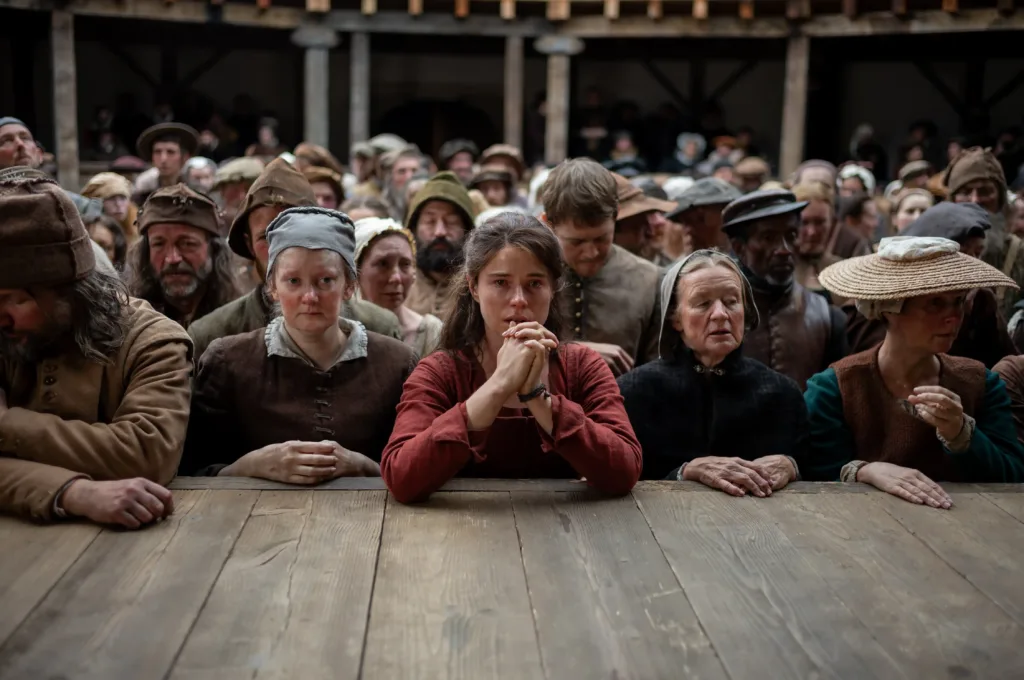
Jessie Buckley (Agenes Shakespeare) is the standout performance, her incredibly raw emotional performance is best encapsulated by the guttural scream she lets out at the death of her child. After Zhao deploys a clever cross-cutting technique that cuts between foreshadowed futures and imagined nightmares, she reveals the awful truth and Buckley’s maternal grief is on full display. She’s powerful, empathetic, and a real force of nature to witness.
Paul Mescal’s performance as Williams Shakespeare is mesmerising. His ability to engage in sharp outbursts with no warning shows how brilliant he is at playing into Shakespeare’s unpredictable and complex emotions, being able to switch from calm to maddened in an instant.
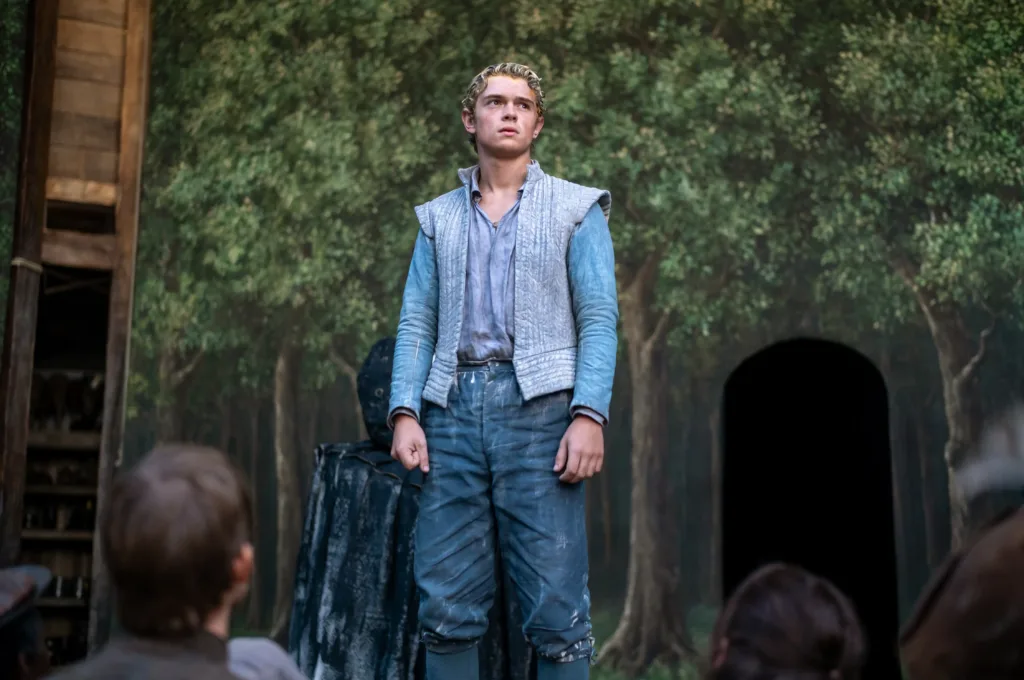
The film cathartic power is most evident in the final act, which depicts a staging of the play Hamlet that Zhao filmed at the actual Globe Theatre in London where Shakespeare had directed his plays in his time. In the film, watching the play Hamlet serves as the perfect catharsis for Agnes who is mourning her son Hamnet. In the same way, the metafictional play within the film serves as a catharsis for the audience too. Just as Agnes experiences the transformational power of theatre, for the audience experiences the transformational power of cinema, witnessing to an incredible on-stage performance by Noah Jupe as Hamlet, while also seeing Jessie Buckley’s masterful performance reacting to seeing the play as Shakespeare’s wife.
In all, Hamnet is an outstanding film with some of the best performances and cinematography of the year. Zhao is so brilliant at capturing the fragility of life. Especially showing the passage of time and how love develops into family, and includes all these tender moments of togetherness fight alongside darkness and tragedy.
If you enjoyed our Hamnet review, check out more from Screen Brief below.
Read more Movie Reviews from Screen Brief.