Marty Supreme is directed by Josh Safdie (Good Time, Uncut Gems), and stars Timothée Chalamet as Marty Mauser, a young table tennis athlete with a dream no one respects, who goes to hell and back in pursuit of greatness.
Set in 1950’s New York, the story immediately drops you into the relentless drive of Marty Mauser set against the chaotic reality of his life. As with all of the film made by Josh Safdie, and his former directing partner brother Benny Safdie, it’s filled with oddball characters that have strong personalities, a killer anachronistic soundtrack of mostly 80s techno pop music, and an incredibly rich cultural context with Marty’s Jewish family in New York forming the tapestry of his life.
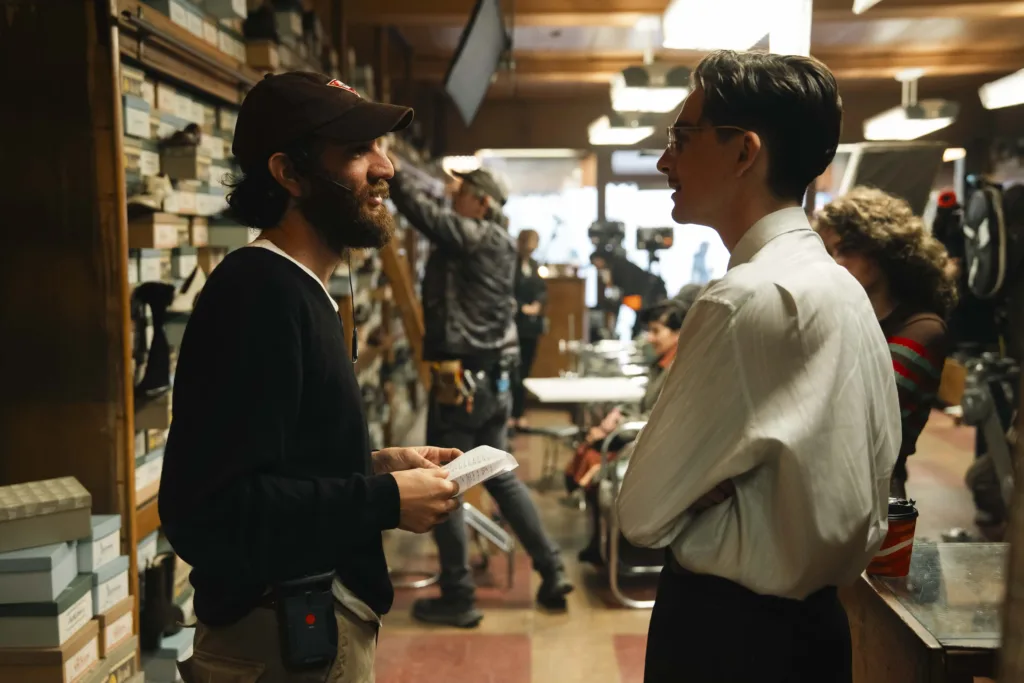
With Marty Supreme, Josh Safdie once again reminds us that he knows how to make magic. He sees a sort of magic in people, everyday objects, and locations that others can’t ordinarily see and he transforms in into a cinematic artform that makes you feel something that was always there but you didn’t realise it. His obsession with different tokens, like the rare earth gem in Uncut Gems, the Spire bottle filled with million-dollar drugs in Good Time, are symbols which represent the obsessive personalities in his movies. Personalities who worship things because they symbolise their pursuit or fixation in life.
The same is true in Marty Supreme, whether it’s the hunk of the Egyptian pyramids that Marty brings home to his mother (in an emotional moment that interrupts his usual tendency of treating her awfully throughout the film), the Orange ping pong ball with Marty’s name on it, or the sperm which fertilises the egg in the opening scene that eventually turns into a match cut of a ping pong ball. These are all symbols that Safdie mixes with powerful music, and creative editing that uses the cinematic artform to transfix you in a religious, almost hypnotic fashion.
The sound mixing of Daniel Lopatin’s score is incredible alongside some brilliant needle-drops of music that matches the intensity and energy of the ping pong matches we watch. There’s a great crescendo in the first act Peter Gabriel’s “I Have The Touch” is heard loudly as it fades into the megaphone announcer’s voice to make you feel the heat and consuming energy of the ping pong match. The sharp editing where the music stops and cuts right to the kinetic sound of the ping pong ball being whipped across the table is brilliant and totally immersive.
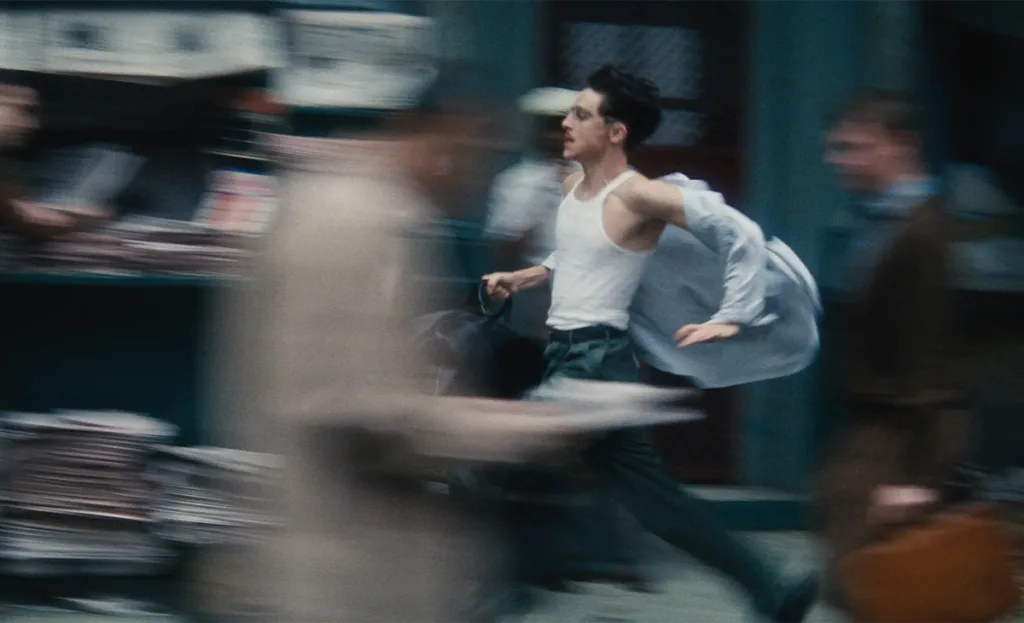
More than anything, there’s a style to hwo Safdie moves through this film. Point of view tracking shots of Chalamet walking through dimly lit New York backrooms, overwhelmed with the dialogue of eccentric character as the song “The Order of Death” by Public Image blares over the top. We’re thrust from one chaotic moment to the next with an assuredness that every bit matters just as much as the last, as we cling onto Marty’s relentless journey. Safdie’s camerawork again is mesmerising, as he capture Marty running through New York city streets with incredible sweeping wide shots that show off how the set designers transformed shopfronts to replicate 1950’s New York, with a very particular blue, grey and steel colour palette that reflects the metallic and youthful style mixed with the character and heritage of the time period.
If you enjoyed our Marty Supreme review, check out more from Screen Brief below.
Read more Movie Reviews from Screen Brief.