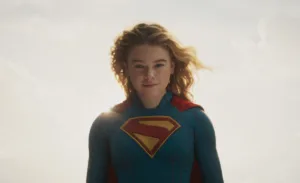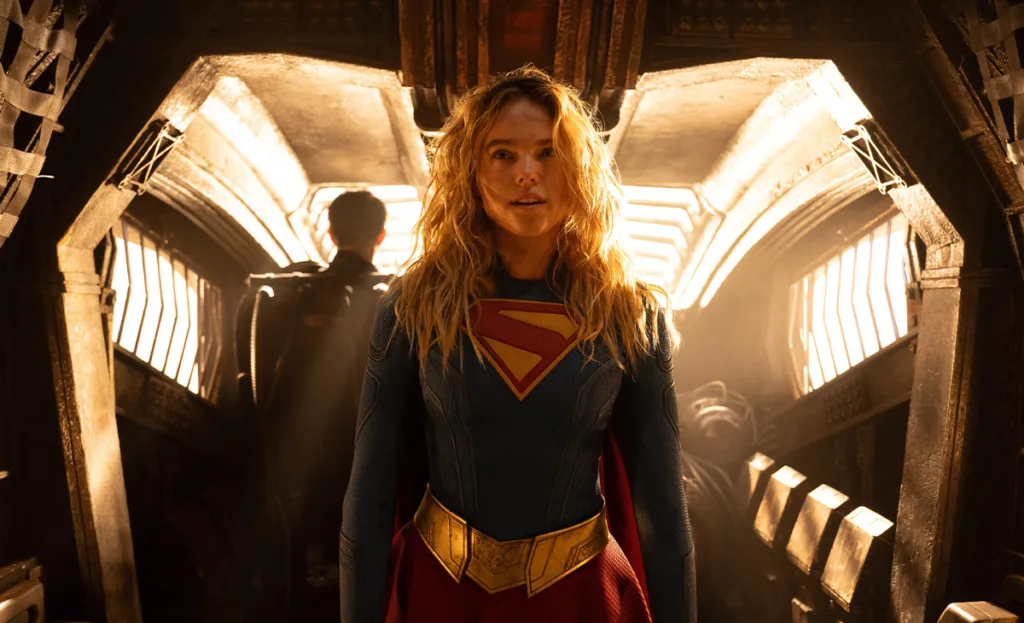
“SUPERGIRL” is a bold, fresh and inventive film that soars highest when actress Milly Alcock delivers a stellar performance as the brash, rebellious Kara Zor-El. In balancing the wit and earnestness of her character, Alcock’s performance is effortlessly relatable, as she learns to overcome grief and trauma in this cathartic story. Craig Gillespie’s choice of music, stylish visual language, and incredibly fast pace move the story along with swiftness and attitude. Ana Nogueira’s screenplay is filled with punchy dialogue that is both refreshing and heartbreaking at times.
“SUPERGIRL” is the latest film from DC Studios, and the second film in James Gunn and Peter Safran’s DCU. It is directed by Craig Gillespie, with a script by Ana Nogueira, who adapts the comic book “Supergirl: Woman of Tomorrow” by Tom King and Bilquis Evely.
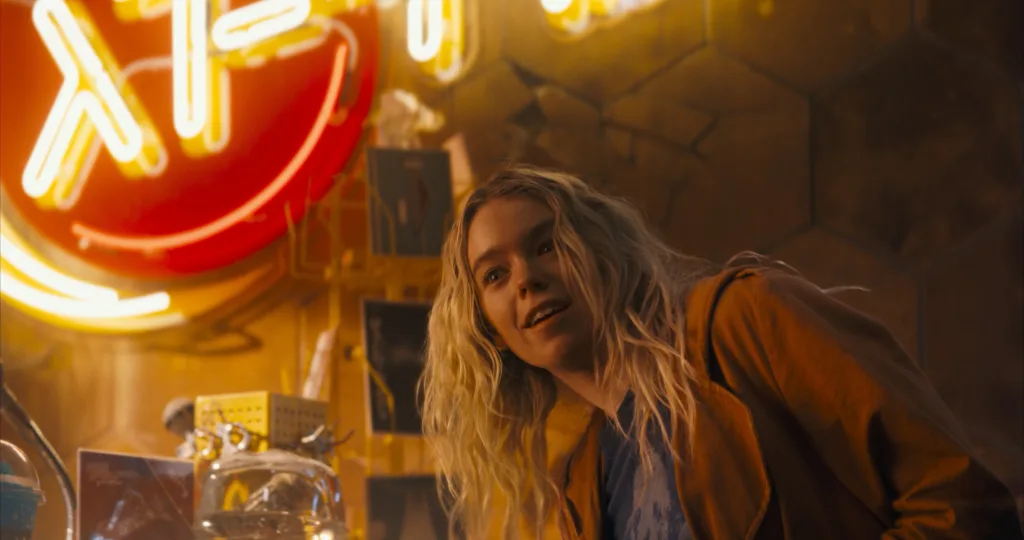
From the outset, audiences are dropped into the frenetic, fun, and chaotic life of Kara as she celebrates her 23rd Birthday. An incredibly fun montage set to the song “This Summer” by Sleigh Bells sees Kara as she messily gets out of bed, brushes her teeth, and plays catch with her flying pet dog Krypto while floating in outer space of course. It’s this scene which sets the tone for the rest of the film, it’s uber-stylish with vibrant colours, an incredibly detailed interior of Kara’s space ship that exudes personality with its yellow and pink decorations and retro-futuristics vintage tech. Alcock’s nonchalant attitude, matched with Gillespie’s well-chosen poppy needledrops of 2020s alternative music.
The film provides a good heap of action and dramatic moments as well, with the death of farm girl Ruthye’s family at the hands of the brutal Krem, the villain of the film, providing the impetus for the revenge story that ensues. Paired of course with the fact that Kara must rescue her dog Krypto from dying from a poison arrow that only Krem has the antidote for. The ensuing story sees Kara and Ruthye jump from planet to planet (five to be exact, which includes some brief scenes on Earth, and flashbacks to Krypton), each offering its own unique visual style, and dose of well-directed action set pieces. One highlights is the fight against a crew of aline pirates on-board an intergalactic space bus. The creativity shown in the choreography, which is zippy and messy in the same way Kara is, and the way it’s match cut against the music makes it incredibly fun.
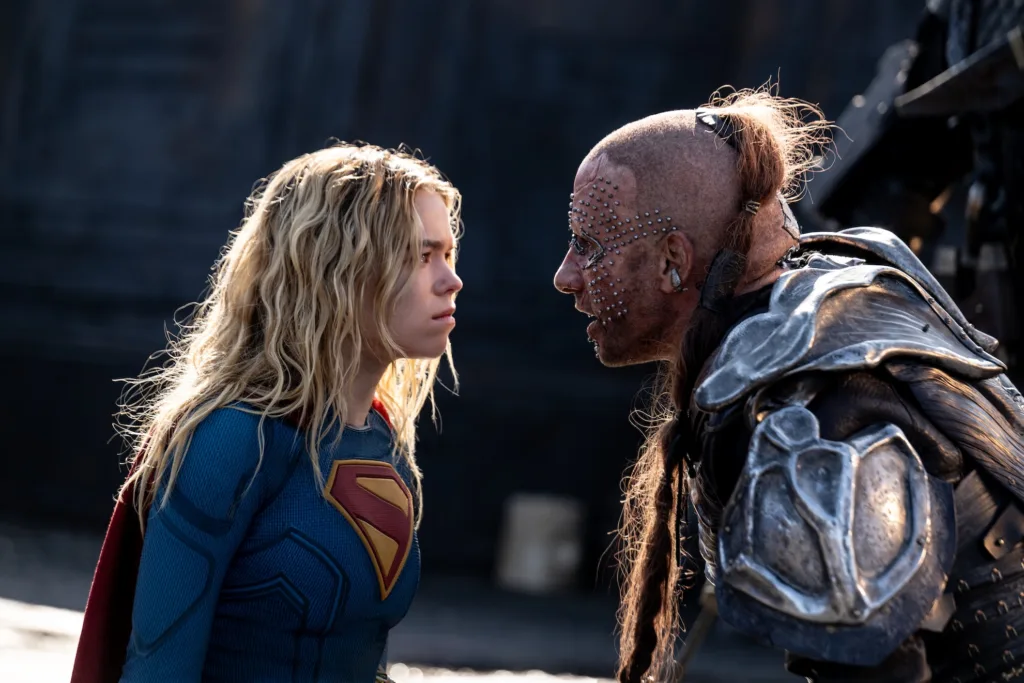
The film runs for a lean 107 minutes, meaning that it does truly fly by. Nogueira’s script shortens the span of the comic book (which takes place over many months) to just three days. This gives the film a much swifter pace that allows audiences to feel more excited about the fast-moving ride, rather than being deeply immersed in the vast, treacherous journey that the comic book offered.
This means that at times, things can feel wrapped up very quickly, with the story moving on to introduce new character and plotlines before you even have a chance to absorb the last one. This becomes especially evident in the third act, where things progress exceedingly fast, without the true depth needed to feel the struggle and pain of being hunted by such a brutal villain as Krem.
While the comic offers extended moments of taunting, moral arguments, and deep contemplation in a hard-won drawn out battle, the film’s third act resolves things reasonably quickly (even if it does show off some excellent choreography along the way). Even still, it’s the fact that Gillespie knows how to make the impactful moments matter allows it to still pack a punch in this short runtime. That’s particularly evident in the final moments of the final battle, with one battle image that remains seared into your brain.
We also wanted to mention that Screen Brief had the opportunity to interview the film’s writer, Ana Nogueira. So if you are enjoying this review, please also watch our conversation with Ana where we discuss her approach to writing the film, adapting the comic, and the thematic angle she approached Kara’s character from:
It’s notable that this is the first time DC has ever made a direct screen adaptation of a comic book of theirs. While many other films have been loosely inspired by various comic books, this is a 1-1 adaption, closer to what the Watchmen and V for Vendetta films were (which we technically claim are not DC films!)
In adapting the comic book, Gillespie swaps the lush hilltops and vast corners of black space filled with vibrant neon space dragons for the gritty street level action more reminiscent of a Western shootout movie set in space. This if course still comes with his own signature style. One element that Gillespie does emulate well is the road trip nature of the film. Kara and Ruthye meet different characters along the way, picking up different smarts and tools on their journey as they encounter oddballs and aliens from all corners, including one scene in a bar that feels very cantina-esque.
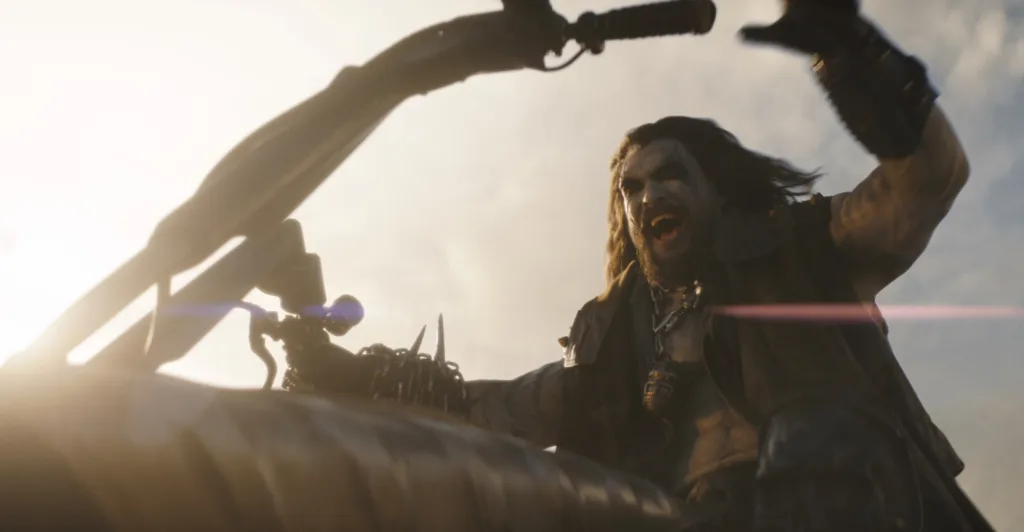
One notable addition they find is Lobo, played by Jason Momoa, who has famously campaigned to play the iconic comic book character for over a decade now. Importantly, Lobo was not present in the original comic book. His addition here is welcome however. The exuberant energy that Momoa brings to the role is impressive, for someone with such a loud personality, it’s amazing that he does truly disappear into the character here. His voice is altered, his persona is different, even the way he walks is different. And yes it can become a bit much when his triumphant entrance to save (or destroy) the day happens for the third time in a row, but such in the nature of a character like Lobo. He adds some tension, some playful back and forth, and introduces a different perspective to the central moral quandary of the story about revenge compared with acceptance.
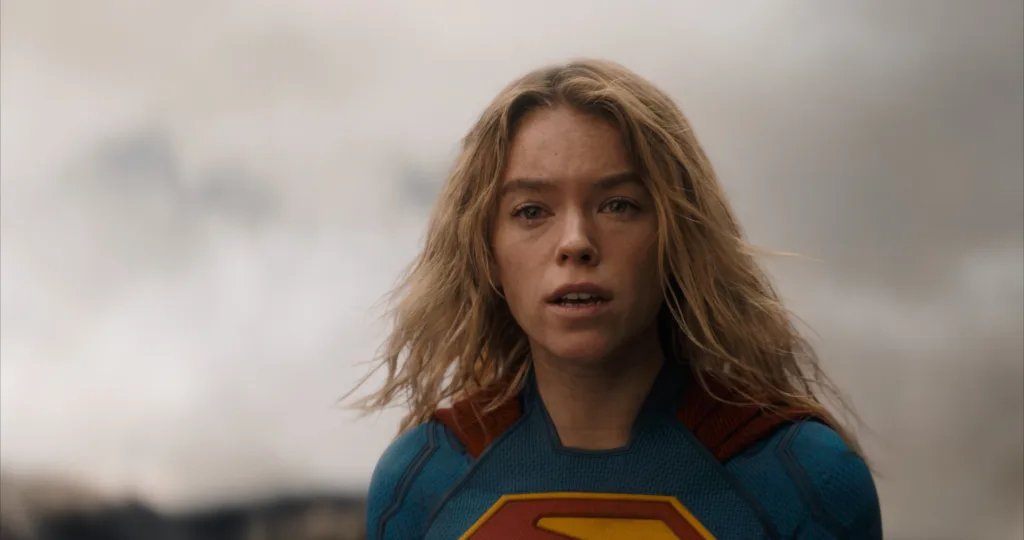
In all, the strongest part of the film is the thematic resonance it manages to have by the end. This is achieved by giving Kara a strong arc centered around forgiveness, acceptance, and the impact that grief has on a person’s outlook on the world. Kara is not perfect, she is messy, she makes mistakes in this film, including mistakes that have consequences for innocent people. She also makes some surprising decisions, that cement her outlook in dealing with problems as sharply different to Superman. Even still, her perseverance and grit in the face and the subsequent lessons she imparts this on Ruthye are heartwarming and inspiring.
In the end, the film’s message is best described by the lyrics of the final needledrop of the film, a soft cover of the Jimmy Eat World Song about self-acceptance, “The Middle” by Kelty Greye & KidMotel. As Kara battles her way through the Brigands, she’s still finding the strength to fight for goodness, and to forgive others, even after she lost everything herself.
The way that Gillespie’s visceral action choreography slows down and meshes with the sound design to hit the beats of the juxtaposed soft song is beautiful. It represents exactly who Kara is. Goodness in the face of a horrible darkness and violence. Perseverance in the face of hopelessness. She opens the film feeling lost, isolated, and dealing with the loneliness and depression of having lost her entire family by drinking herself into a stupor. She ends the film not as a perfect hero, but as someone struggling through the pain to still do what’s right.
Supergirl is a hero who has to make tough decisions, and must find the strength to defeat cruelty while sparing others of the burden that revenge places on them. A warrior that carries the weight of her own past so that she can make the world lighter for others. She’s as messy as she was before, still not having fully found herself, but she pushes on and does the right thing in her own way. As the lyrics go, “Don’t write yourself off yet. It just takes some time. Little girl, you’re in the middle of the ride. Everything will be just fine.”
If you enjoyed our Supergirl Review, read more DC News from Screen Brief here.