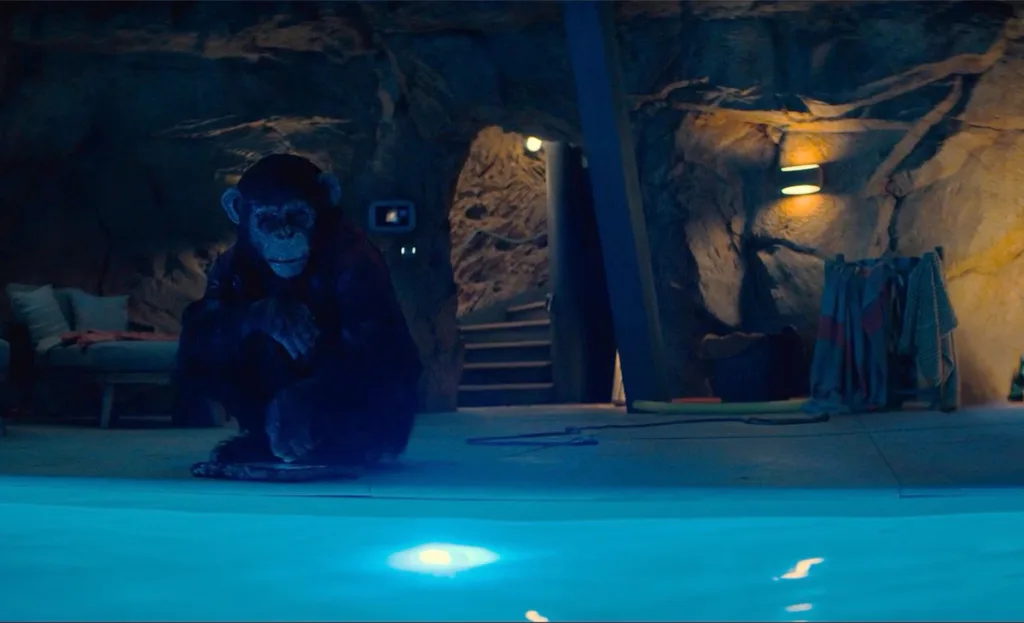
Primate is a brutal, hyper-violent horror film that proves why being trapped in a poolside mansion with a murderous chimp is the most terrifying thing imaginable. It’s unbearable physical tension and fear, is surpassed only by its immensely violent killing spree.
Primate is directed by Johannes Roberts (47 Meters Down, V/H//S 99) and depicts a holiday pool party gone wrong, when a family’s beloved pet chimp contracts rabies and unleashes terror on his owner Lucy (Johnny Sequoyah) and her friends.
Whatever sort of gory disgust, gore and violence you can imagine, this film throws something ten times worse at you and shows every single detail on screen. Faces are ripped off, body parts are torn apart, and nothing is left to the imagination. It is vicious, it is shocking, and for its entire 89-minute runtime Primate holds nothing back.
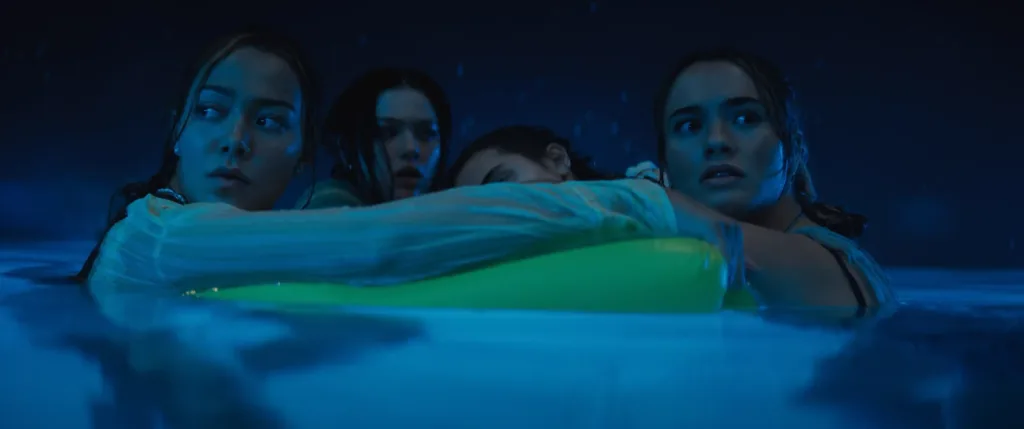
The concept for the film is simple, which is what makes it so compelling. After meeting what seems like an awfully intelligent and loving chimp who is part of the family, we witness the chimp contracting rabies (without the family’s knowledge). Rabies turns mammals insane, but crucially, also gives them an irrational fear of water. Naturally, once they find out, the characters all jump in the pool, and this becomes their safe haven for the rest of the film.
As such, the film’s strength lies in the way such a simple concept which hooks you into the fear and logic of the story. Everyone is trapped in the pool, they don’t have access to their phones (so they can’t call for help), and the rabies-infested chimp is waiting meters away to murder them. As soon as the first kill is revealed, the stakes of the film are well-established. Any step outside of the pool is an invitation to being instantly attacked.
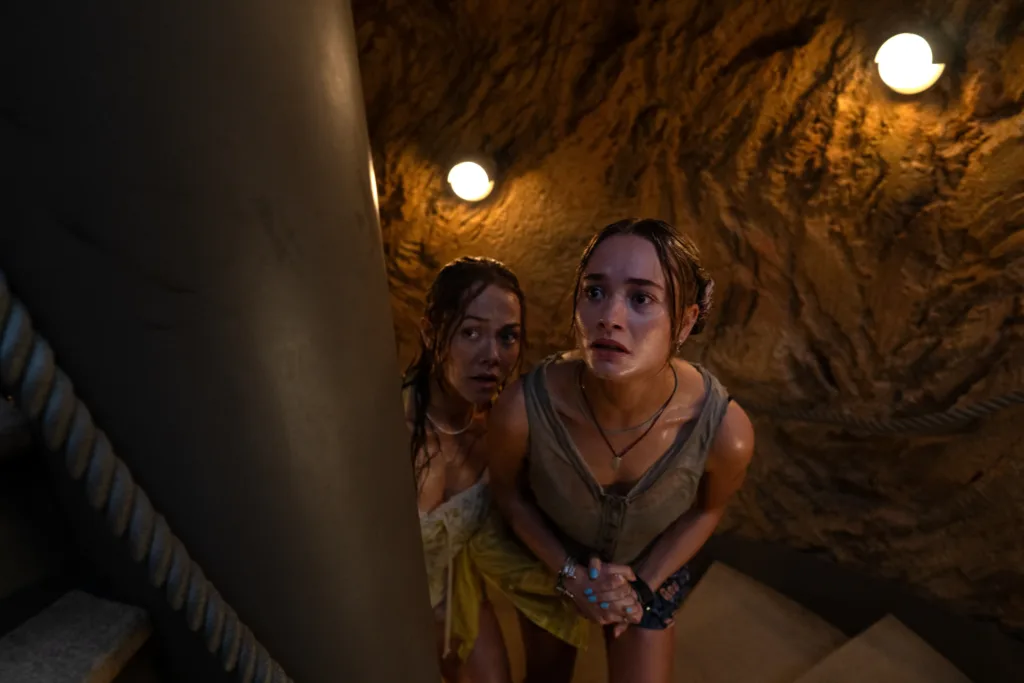
This allows the film to achieve the perfect balance between building fear and paying that off with utterly satisfying brutal horror. As the tension builds, the film draws the audience in to guessing how the characters could possibly make it out, panning the camera around to objects, routes, and different options for the characters to escape.
The film ever goes too long without a new action sequence where it reminds you how viscerally brutal it can be. As characters become more desperate throughout the story, they find themselves bolder in their willingness to enter dangerous situations. In returns, you are left with your skin crawling and eyes covered fearing they could ever possibly escape being murdered by the chimp.
Crucially, the film uses space as a central element for building tension. By confining all of the action to the one house, it sharpens its focus and makes the audience feel trapped just as the characters are. In the same way that a central setting can create a feeling of warmth and intimacy in more light-hearted films, the confined setting of one location here builds pressure and intensity that works to benefit it as a horror film.
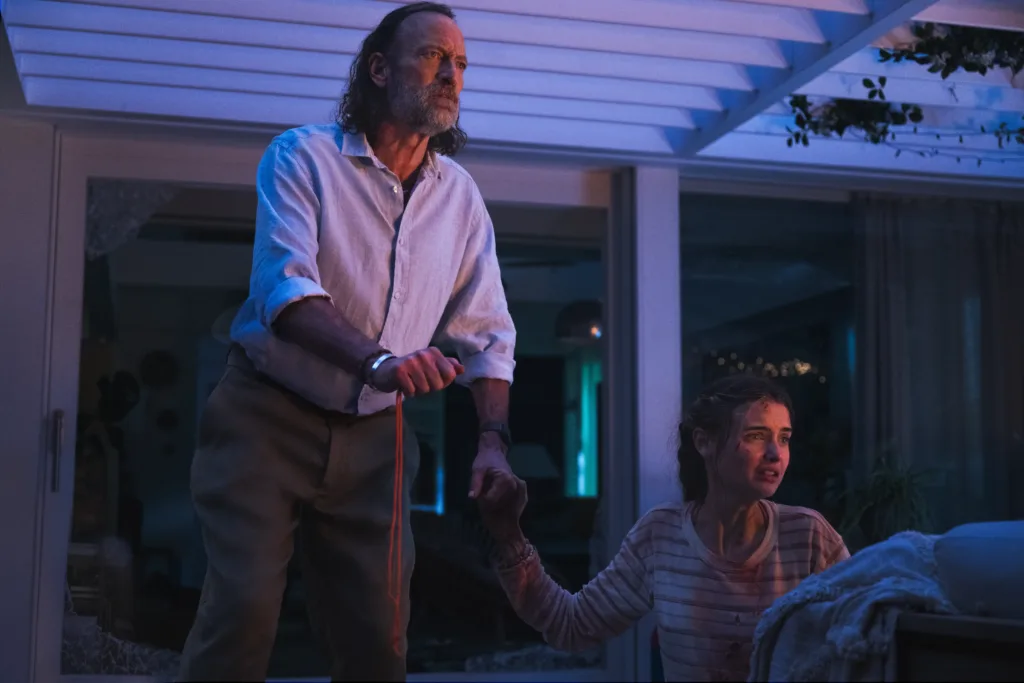
This works especially well because the choice of setting is excellent. The house is an elaborate beachside mansion with floor-to-cleaning glass walls, built on a literal cliffside, complete with lavish furnishings and multiple stories. As new guests arrive, we make our way into different pockets of the house and get nail-bitingly close to opportunities for an easy getaway, only for most to be squandered by the sheer speed and brutality of the chimp in killing its prey.
Characters intricately contemplate whether a quick dash to reach for a phone, a pair of car keys, or a run to another room is a viable option for escaping the chimp. Most of them don’t work, but the way in which director Johannes Roberts depicts them makes for wonderfully engaging tension that often uses high contract lighting, a night-time setting, and clever blocking to make it so that you’re never sure when and how the chimp is going to attack.
The tone of the film is also refreshing. A focused mix of sharp horror set against quiet moments. When characters aren’t being ripped apart by the chimp, we revel in softer moments set against moonlit backdrops in a pictures house as they softly whisper strategies to escape and hide out. This not only builds tension, but also an emotional bond with the character as we feel stranded alongside them, hoping to see their escape but feeling their every breath of fear and uncertainty along the way.
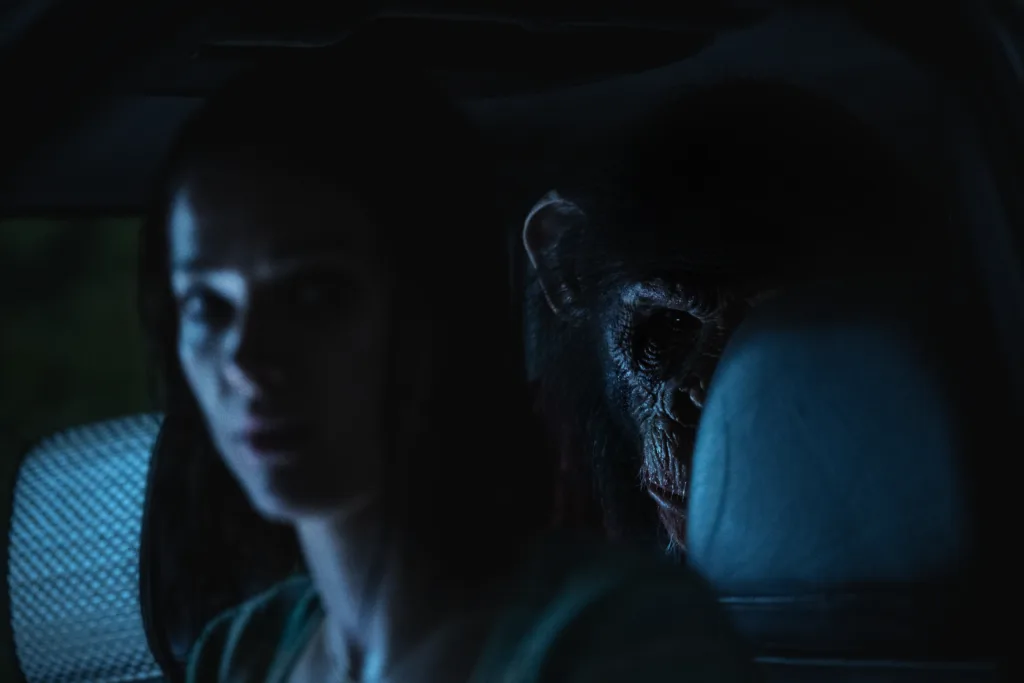
One final surprising aspect is how heartbreaking it is to watch the character have to turn on a creature that they love. It becomes obvious reasonably quickly that Ben is no longer a friendly family chimp. Understandably, Ben’s owners have a hard time accepting this because they’ve grown up treating him like family. While their more distrusting friends are immediately ready to kill Ben, his owners are much slower to accept the harsh reality.
As we watch them come to terms with the fact that the chimp’s become insane, to eventually actively trying to kill him, it’s heartbreaking to see their attachment morph into disaffected survival instincts. For a horror film that mostly delivers thrills, this underrated emotional aspect helped deepen it, and made all the death, and repercussions more tragic.
Primate is an excellent horror film that traps the audience inside a story of physical tension with no way out than to face the viscerally brutal attacks that it promises to deliver without holding back. It’s easily worth a watch. That is, if you think you can keep your eyes open for the whole time.
Primate is in Australian cinemas on 22nd January 2026.
If you enjoyed our Primate review, check out more from Screen Brief below.
Read more Movie Reviews from Screen Brief.