With The Further Mis-Adventures of Cliff Booth, director David Fincher takes an already brilliant script by Quentin Tarantino and elevates it to a dynamic and rich story filled with colourful Hollywood personalities and grungy backdrops.
Set in 1977 Los Angeles, eight years after the events of Once Upon a Time in Hollywood, the film finds Brad Pitt’s Cliff Booth navigating a changed Hollywood as a fixer who still knows every corner of the city.
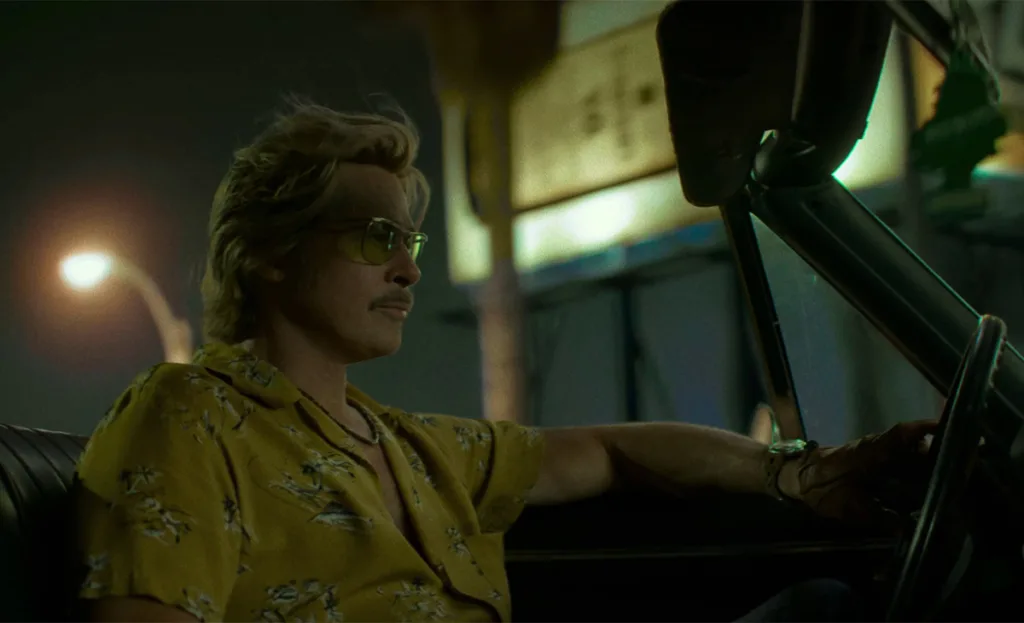
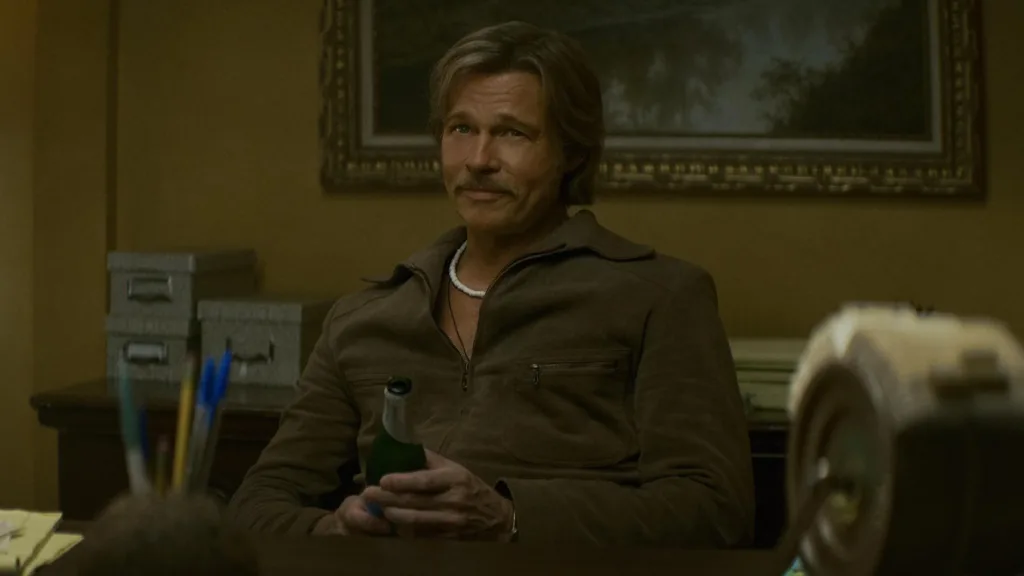
Brad Pitt is gruff and charming as Booth. He totally embodies the slick cowboy attitude, and in the years that have passed since Once Upon a Time in Hollywood, he has actually grown into the role of an ageing Cliff Booth who’s a little older, a little more tired, a little more annoyed with everything he has to put up with. He plays a reluctant shoot-from-the-hip style hero, and it has an effortlessly cool appeal, making for a great late-stage career play for Brad Pitt. It stands in contrast to something like the F1 movie, where he also played a veteran expert, who was arrogant towards his younger colleagues. However, in F1, Pitt can come across as plain arrogant without many redeeming qualities.
In Cliff Booth, it’s quite the opposite. He’s arrogant, but the audience can also feel empathy for him, there are moments where we feel sorry for Booth because he’s lonely, has a father he’s caring for, and doesn’t really have many genuine friends or connections left. He’s a loner that is mostly used by others for his know-how. The result is Booth gets himself into situation after situation that are increasingly hard to get out of. These often require violence and sloppy, last-ditch solutions. And we get to see the character struggle through things, which makes him ever more relatable and fun. The fact that he is single and sort of a bit of a deadbeat, but also still confident and cool, really fleshes out the character to be very three-dimensional and relatable in a good way.
The story feels a bit like an anthology film, even though it only takes place over a few days. That’s because over the runtime we get to see Cliff Booth fix up a whole lot of different interrelated problems. While there’s certainly a connective thread it feels more like we’re experiencing snippets of Cliff Booth’s wildly unpredictable life that mostly consists of him barely scraping through the conundrums he finds himself in. Booth is appealing specifically because he’s a bit wayward of a character by now. He’s lost, but he’s still smart enough, savvy enough and strong enough that he can be of use to himself and others. It’s entertaining to watch him just get through all the trouble he gets himself into. In this way, it absolutely lives up to its title, where we experience his various misadventures that make us root for him as a loose cannon.
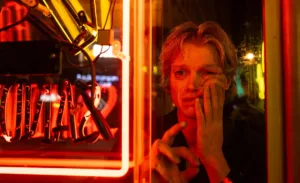
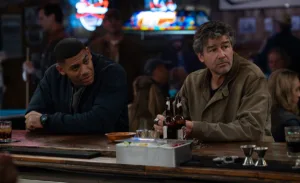
In terms of the visual language, Fincher really nails it. The magic of the film is that it doesn’t look like a classic Tarantino-style film. It looks like a Fincher film, but with a Tarantino script, which is a beautiful combination. The film is textured with beautiful imagery of 1970s Los Angeles. It blends neon lights with dimly lit, warm interiors that feel moody, reminiscent of a lot of Fincher’s other work, like The Social Network. It’s grungy. The locations also feel very culturally rich as we visit different parts of Los Angeles, featuring Filipino gangsters, mobsters, actors, across the back rooms of cinemas, dive bars and brightly lit country clubs all seen through the lens of a Hollywood veteran who’s been through it all and knows every corner of LA.
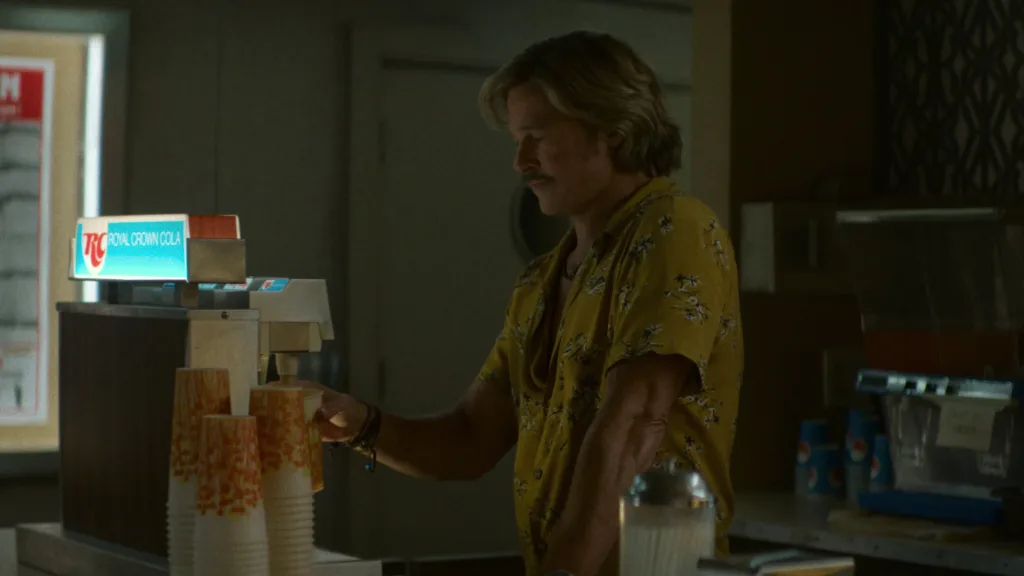
As the film progresses, it does feel like we get to know LA through the guise and expertise of Cliff Booth himself. Booth knows the neighbourhoods, the spots where you can do dirty deeds, the tips and tricks that let you leave behind your baggage, and all of this makes for a very lived-in, cool, richly textured setting for the film.
The energy of the film is also quite relaxed and smooth, emulating the personality of its lead. Much like Cliff Booth himself, the film is smooth-talking and wades its way through the more complex parts of the crime narrative and romance stories with humour, memorable anecdotes and drawn-out conversation with signature Tarantino dialogue. The balance of more intimate dialogue scenes with just enough action that delivers in a huge way is perfect. The final act features a long stretch of rising tension that builds and builds in a brilliant way which is so worth it.
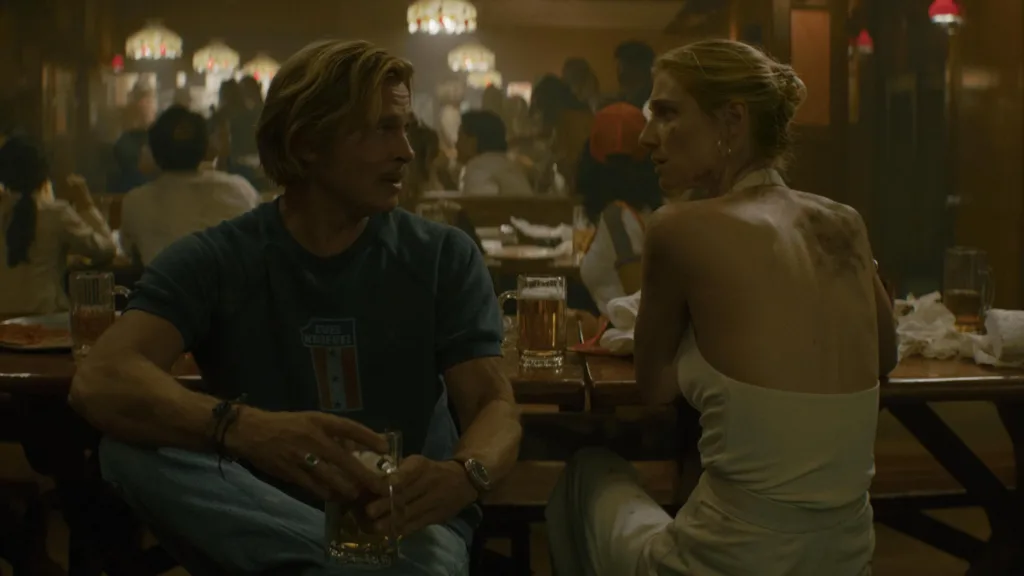
By the end, the audience is totally enthralled by Cliff Booth’s clever manipulation in how he’s spent the time to lure his opponents in with his wit and storytelling before finally culminating in a big, dramatic, physical, violent action payoff. The appeal here is that rather than cutting straight to the action, the real story is in the masterclass that Cliff Booth (and the film itself) gives in the importance of build up. Audience learns what it means to be a slick talker, to live in the moment and set the tone to be just right before cutting to the action. It makes us root for Booth even more, while also being tremendously satisfied at the payoff.
The Further Mis-Adventures of Cliff Booth is an outstanding film with a richly textured grungy Los Angeles framed by the relatable and roughed-up worldview of its distinct lead character.
In IMAX theatres from November 25 (November 26 in Australia) and streaming on Netflix from December 23.
If you enjoyed our The Further Mis-Adventures of Cliff Booth review, check out more from Screen Brief below.
Read more Movie Reviews from Screen Brief.
Follow Screen Brief on Twitter, YouTube, and Instagram.