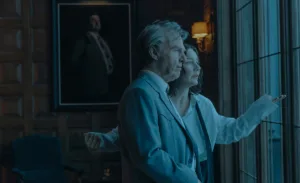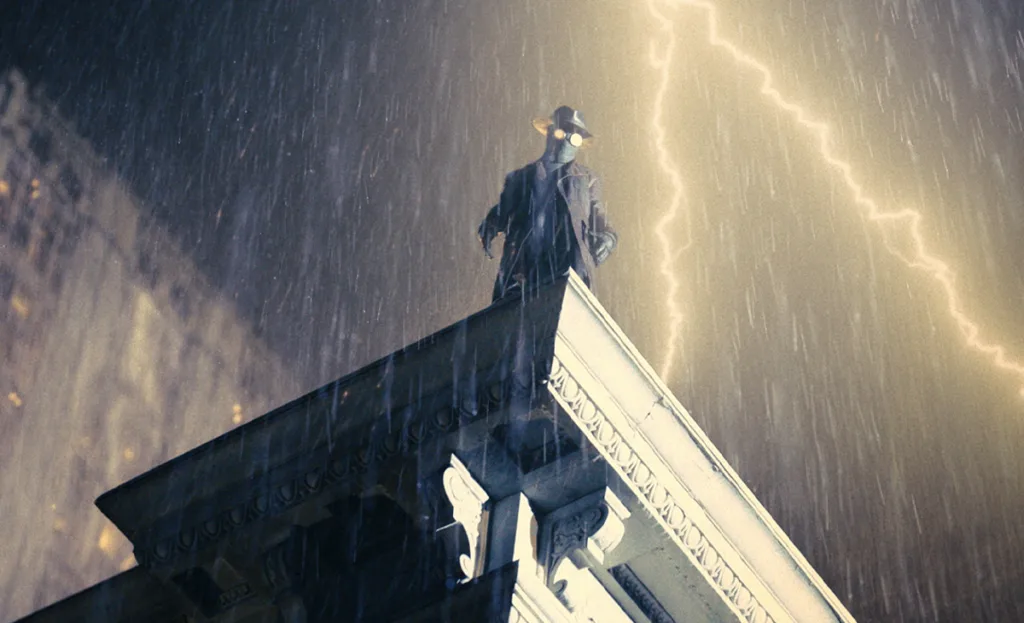
Spider-Noir is the new live-action series that tells the story of Ben Reilly, a seasoned private investigator in 1930s New York, who is forced to grapple with his past like after he gains the powers of Spider-Man and becomes the city’s one and only superhero.
Inspired by the late 2000s comic books Spider-Man Noir, the show features a slight reworking of the origin, swapping out Peter Parker for Ben Reilly as Spider-Man Noir. This means it’s separate to the Spider-Man Noir we met in the animated ‘Spider-Verse’ movies, which was also voiced by Nicolas Cage. Choices like these are just some of the ways the producers, who also produced the Spider-Verse movies, are trying to differentiate the show from the animated films (and potentially provide new opportunities for multiversal crossovers in the future).
The show is produced by Sony Pictures Television, and features 8 episodes each 45 minutes in length, that viewers can choose to stream in two ways, in classic black-and-white noir style, or full-hue true colour. All 8 episodes premiere on Prime Video on May 27th (with early access to all episodes on May 25th for MGM+ subscribers).
To learn more about the show, Screen Brief is thrilled to share a series of exclusive interviews with key members of the cast and crew, including Nicolas Cage, which were kindly shared with us by Prime Video.
Nicolas Cage on Making Spider-Noir His First TV Project
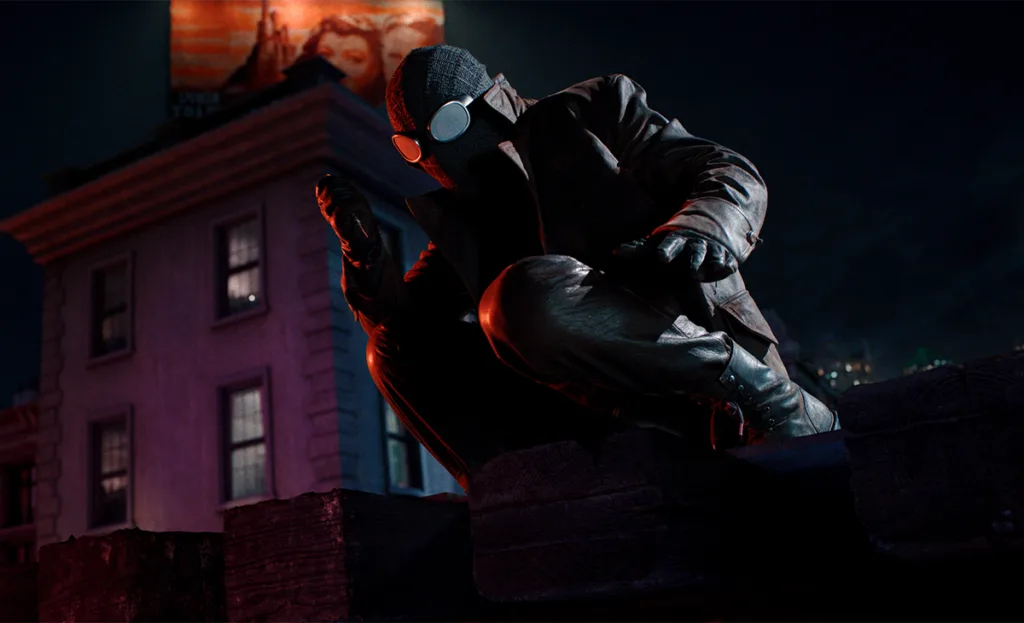
It’s notable that Cage, an actor known for his storied and hugely diverse filmography, has never before taken on a TV project. He spoke about what prompted him to choose Spider-Noir as his first one. “I had been imagining a performance presentation for quite some time. It’s no secret that I’m influenced by different art forms, and I had been largely influenced by the pop art of Warhol and Lichtenstein. Just as in “Wild at Heart,” when I drew on Warhol, I thought wouldn’t it be interesting to do a Lichtenstein performance—utilizing comic book energy and fusing it with a classic black and white style of film acting.
And lo and behold, along came “Spider-Noir.” My interests were predominantly cinema- based; however, when I learned “Spider-Noir” would be episodic television, I thought that format would lend itself well to my concept since comic books are inherently episodic.”
Showrunner Oren Uziel on How The Show First Came To Be
This is the first live-action Spider-Man TV series in more than 30 years. Such a monumental milestone did not go unrecognised by showrunner Oren Uziel. He shared a bit about how he first joined the project. “I first got involved through the producers Phil Lord, Chris Miller and Amy Pascal. I’ve worked with all of them in the past and always had a great experience. I loved that the project was a live action Spider-Man, I loved that it was set in New York in the 1930s and most of all I loved that it was rooted in the Noir genre. I’ve always been a huge fan of film noir, from the classics straight through the neo-noirs of the past 30, 40, 50 years and counting, so I saw “Spider-Noir” as a magical opportunity to stake my claim to this particular corner of the larger Marvel universe.”
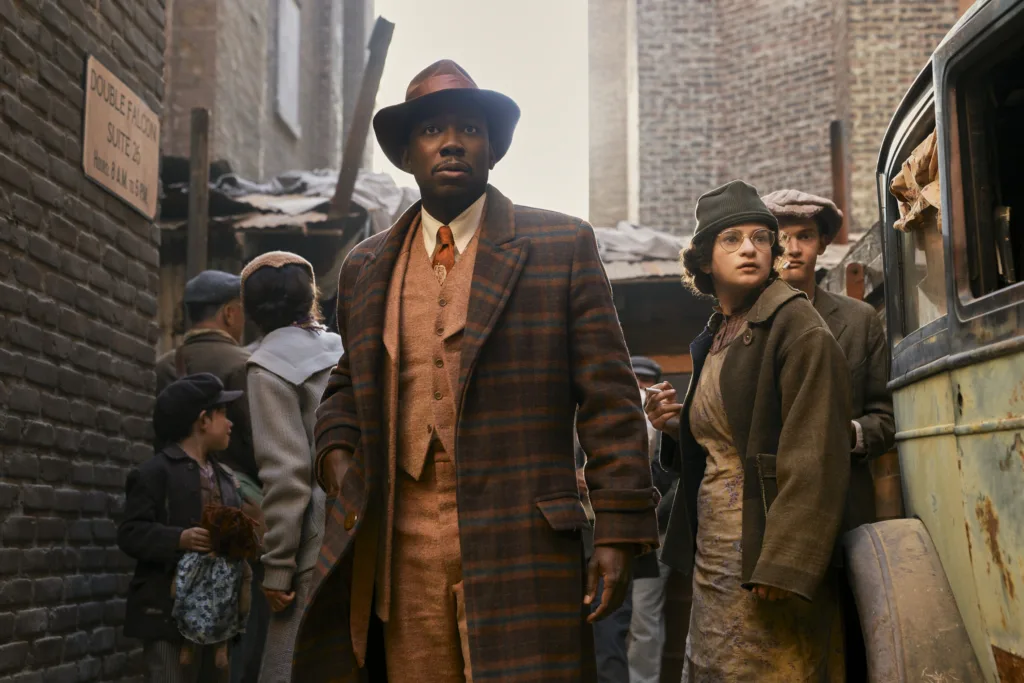
Photo: Aaron Epstein/Prime © Amazon Content Services LLC
Cast and Crew on the 1930s New York Aesthetic
One of the hallmark style pieces of the show is that it is set in 1930s New York, giving it a distinct feeling with Art Deco architecture and a wonderful of the city in that time period.
Cinemtographer Darran Tiernan (known for his work on The Penguin) shared a bit about his process of crafting the visual aesthetic of 1930s New York. “There were so many exciting parts from the very beginning of conceptualizing the look to shooting. Building a 1930s New York that felt rich, lived-in, and visually “of the period” without tipping into parody. We drew inspiration from the incredible noir films that came out of the classic era, from the early 1940s through the late 1950s, and leaned hard into that grammar of deep shadows, smoke-filled interiors and off-kilter framing. With Nicolas Cage as a detective in a Spider-Man universe, we made the camera work feel both respectful to the genre and very playful which was really thrilling for me as a Cinematographer.”
While production designer Warren A. Young added that creating the feel of the era was a team effort. “I’d say the most exciting thing about achieving the look of “Spider-Noir” is how my team, our cinematographer Darran Tiernan, and our costume designer Trayce “Gigi” Fields were able to harmonize in the development of, and generating a look which firmly places the viewer in 1930’s New York, largely through deep research of photographic and written evidence of the city during this era.”
The cast were also immersed in the style of the 1930s, with Nicolas Cage sharing that the best part of the 1930s setting was for him was “reviewing and embodying my favorite actors of the 1930s and finding ways to pay them homage through the “Spider-Noir” character.”
Cast and Crew on the Visual Aesthetic and Black and White vs Colour Viewing Experience
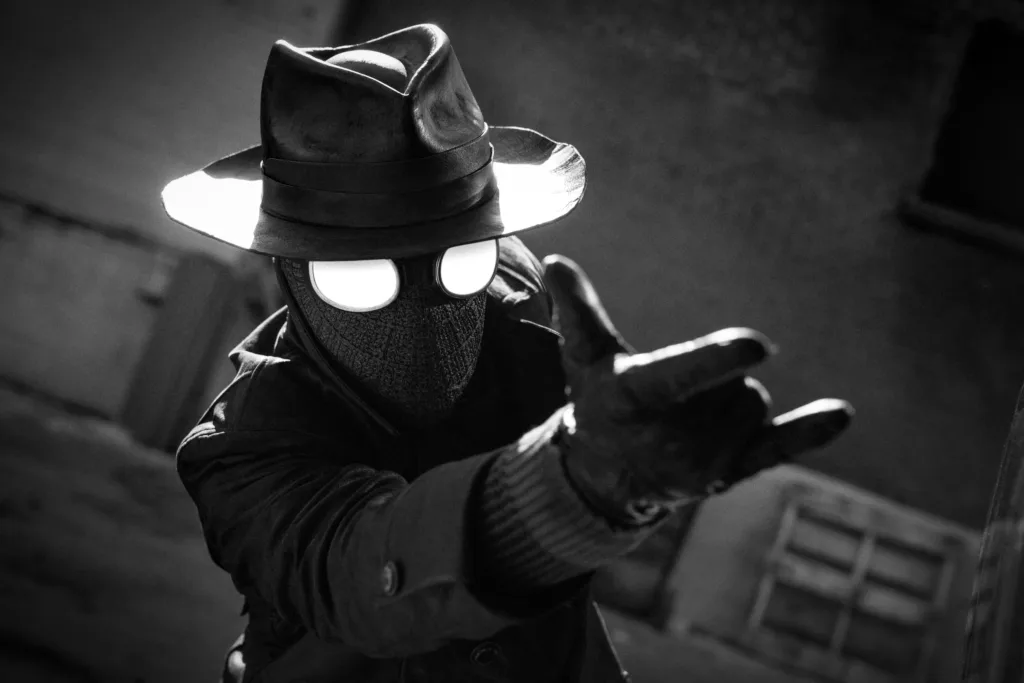
The show is quite visually inventive, both in the lighting and camera angles it uses, but also in that it allows viewers to watch the show in two different options, Black and White, or Colour. A concept that introduces a sort of “choose your own adventure” element to the show.
Cinematographer Darran Tiernan shared that the process for shooting the show in two different ways was quite technical and involved a lot of early planning. “Shooting for both color and black-and-white versions meant we had to design every shot so it worked as a strong noir image first and then as a richly textured color composition. We treated the black-and-white as the “core” aesthetic—building big contrasts, strong silhouettes, and graphic shape and then using the color pass to reinforce mood rather than distract from it.
We had an incredible body of work to inspire us from the era of noir films, the photography and graphic design of the time. That rich visual legacy gave us a strong foundation to build on while still allowing room to put our own stamp on “Spider-Noir’s” look.”
Production Designer Warren A. Young highlighted that it wasn’t easy to create both Black and White, and Colour versions of the show. “The challenge of generating black and white and color looks meant we could not assume a hue which works in the color look would work in black and white, and vice versa. As an example, the color red becomes dark gray to black depending on the composition of elements in the red paint, ink or dye. Camera LUTs, the means in which the motion picture camera interprets colors, were created in collaboration with our color timer. We also had to determine which of the black and white, and color LUT’s created for the project would work best in different environments and on each actor.”
We absolutely loved the show, and you can read our full review (no spoilers) right here.
Spider-Noir premieres with all 8 episodes streaming on Prime Video on May 27th (with early access to all episodes on May 25th for MGM+ subscribers).
If you enjoyed our article where Nicolas Cage and the cast and crew of Spider-Noir discuss bringing the show to life, the 1930s New York setting, and shooting in Black and White and Colour, check out more from Screen Brief below.
Read more Streaming News from Screen Brief.