Eternity is a cleverly high-concept film that offers amusing insight into how we choose to spend our lives, create meaning in them, and what that means for if we got the chance to live them over again. It offers an excellent blend of hilarity with sincerity by dealing with heavy themes in a clever and funny way.
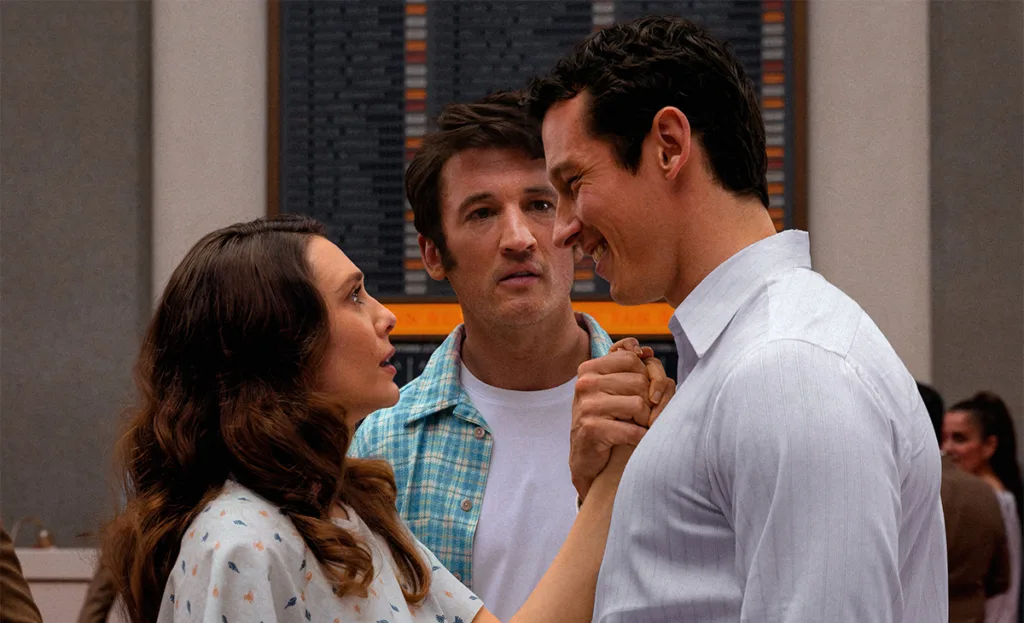
When Joan (Elizabeth Olsen) dies and goes to the afterlife, she’s faced with the impossible choice of spending her eternity with the husband she spent her life with, Larry (Miles Teller) or her first love Luke (Callum Turner), who died young and has waited decades for her to arrive.
The concept of the afterlife is a lofty one which comes with a lot of existential burdens. And yet, the film does an excellent job of creating its own logic for the afterlife. It exists in a fictional reality where during the afterlife, souls have one week to decide where to spend eternity. Clever choices allow it to make interesting commentary without getting tied up in too much religious or scientific pondering. Such as the fact that in the afterlife, people’s bodies reset to their happiest age, allowing for most of the actors to be young again and make choices as if they are at the start of their lives.
Most of the humour comes from its amusing narrative choices for how the afterlife functions in this world. After you die, you depart a train station and enter a hotel which resembles a sort of bureaucratic limbo. For one week, you can tour an expo of stands which are advertising various worlds to spend your eternity in. Capitalist world, beach world, smoking world, all offer funny commentary on how people might choose to spend their lives if death was no longer possible and their perfect world with no problems could exist.

In saying that, the film only treats this as a secondary aspect. Rather than placing too much logic on dealing with the different themes of eternity that a person can choose, the central focus is a more intimately personal one. That is, Joan (Elizabeth Olsen) must decide whether to spend her eternity with her life-long husband Larry (Miles Teller), or her first love (Callum Turner), who died young and has waited decades for her to arrive. This allows the film to break free from the semantic constraints of spending too long on unpacking the practical difficulties of what it means to choose somewhere to spend eternity for and instead focus on who and how we choose to spend it emotionally. In doing so, the central question of the film shifts to essentially be, would you change anything if you could live your life over again?
The outcome is a wonderfully rich philosophical exploration of what matters more in a person’s life. Whether we create meaning through the relationships we’ve formed and the attached and memories we have to them, or whether there is some truer destiny that if given the choice would always be the most fulfilling path for us. It is, functionally, an exploration of whether we believe in the idea of a cosmically chosen soulmate or simply grow to appreciate the life that we built over many decades.
This lens allows for a wonderfully cathartic narrative arc, where through the lens of Joan’s decision, the audience gets to feel what it would be like to have a chance at reliving their life. Joan gets multiple opportunities to put herself first, to consider what she truly wants without the shackles of reality, mortality, or being burdened by the choices of her past. She is faced with a totally clean slate, which is as refreshing as it is daunting.
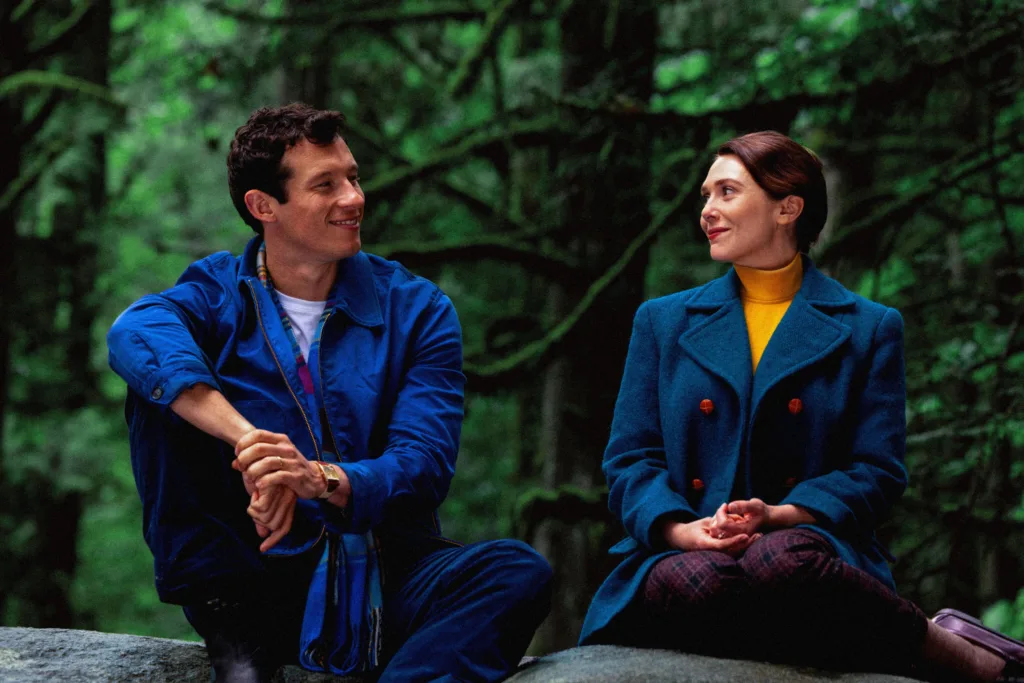
Through this exploration, Joan discovers what most people would find to be true, which is that the time and effort we place into the things we’ve spend our lives building creates a strong emotional attachment that is more valuable to us in a subjective sense than it would be if we were presented with those things blanky, having no prior attachments to them. We care deeply about our own children and our long-term romantic partners precisely because we have spent time investing in them. The final choice then is partially a commentary on the emotional equivalent of the sunk cost fallacy, and whether it really is logical to choose something simply because you have poured emotional investment into it and wish to continue the bond that you have formed, or whether you can actually break free of that to see a potential for a new future.
Conceptually, the only difficult thing to get past is how the incredible fragile nature of memory in the face of actual eternity. Joan seems incredibly attached to her memories of her mortal life, which undoubtably would be extremely prominent in the first few decades of her afterlife. But presumably, thousands and millions of her years after her death, her initial life would exist so far in the past that her memory would barely be accessible and pale in comparison to the infinitely larger number of memories she’s developed in the afterlife. In doing so, it forces us to reckon with whether there would be a primacy effect which prioritising our bias toward the memories we form early on if we were to live forever. Eternity itself is a bewildering concept but luckily the film function more as a question about living one’s life over again, which brings us a valuable opportunity to reflect on the choices we make and how we create meaning in our lives.
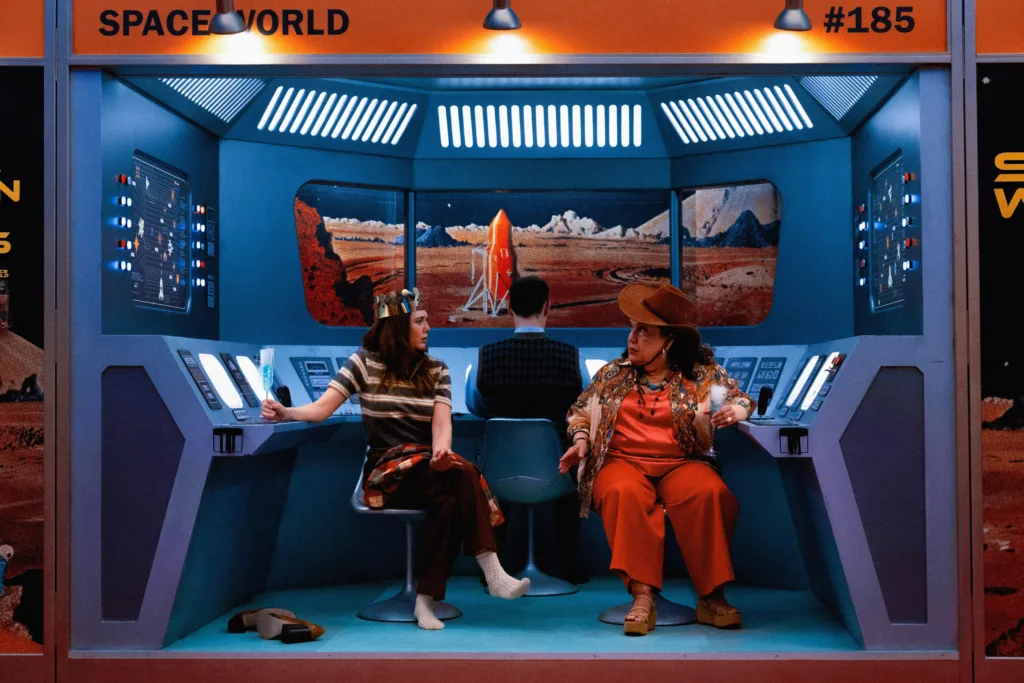
Visually, the film stands out for its intricate set design set against a warm pastel colour palette and finely crafted cinematography that frames the afterlife in a pristine setting. Stunning wide shots of the afterlife hotel show off its beautiful architecture; while using clever practical effects to lean into the slightly artificial feeling of the weird limbo the characters live in. Physical curtains are pulled down each night to change the faux-window backgrounds in each room from day to night, in a kitschy sort of manner that reminds me of how silly this all is. The setting is a dreamlike space that reminds me of other transient spaces like the train on The Polar Express, or the artificial world created in The Truman Show, with the afterlife hotel functioning much like the control centre, a place pulling all the string to control how people’s lives end up. All of this is set against colourful props, with pastel oranges, pink, blue and yellow making up the stunning set design which includes elements of Pop-Art and 70s interior design. It all feels like its articulates in an intentional manner that exudes a feeling of an oddly familiar but foreign place, both welcoming and clinical at the same time.
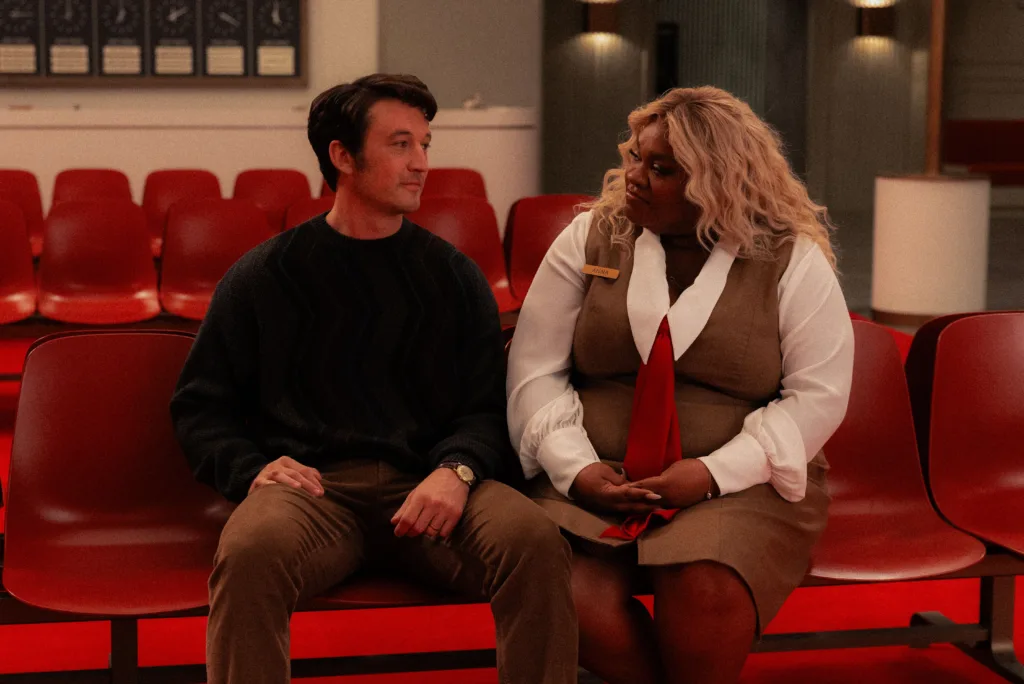
The film is also hilarious. It is funny throughout the entire runtime, with every actor delivering brilliant performances which play off the absurdity of having to choose between the dream-like lover who died young, or the husband who you grew to love despite his annoying traits. Da’Vine Joy Randolph is the absolute standout. She consistently delivers laugh-out-loud moments in how she reacts to the Incredibly, this is perfectly blended with the sincerity you’d expect from a film dealing with such emotionally-taxing subject matter. Each choice is rooted in earnestness and deep self-reflection, which is ever present from the quiet and reflexive performances of Elizabeth Olsen, Miles Teller, and Callum Turner.
In all, Eternity is a wonderfully reflective film that will appeal to audiences who love existential stories about how meaning is created in life and the value of the bonds we form. It’s high-concept narrative offers amusing and clever commentary on how me make major life choices, holding a mirror up to the anxiety we all face about creating a perfect life or simply accepting the joy we can create in the life we have.
If you enjoyed our Eternity review, check out more from Screen Brief below.
Read more Movie Reviews from Screen Brief.