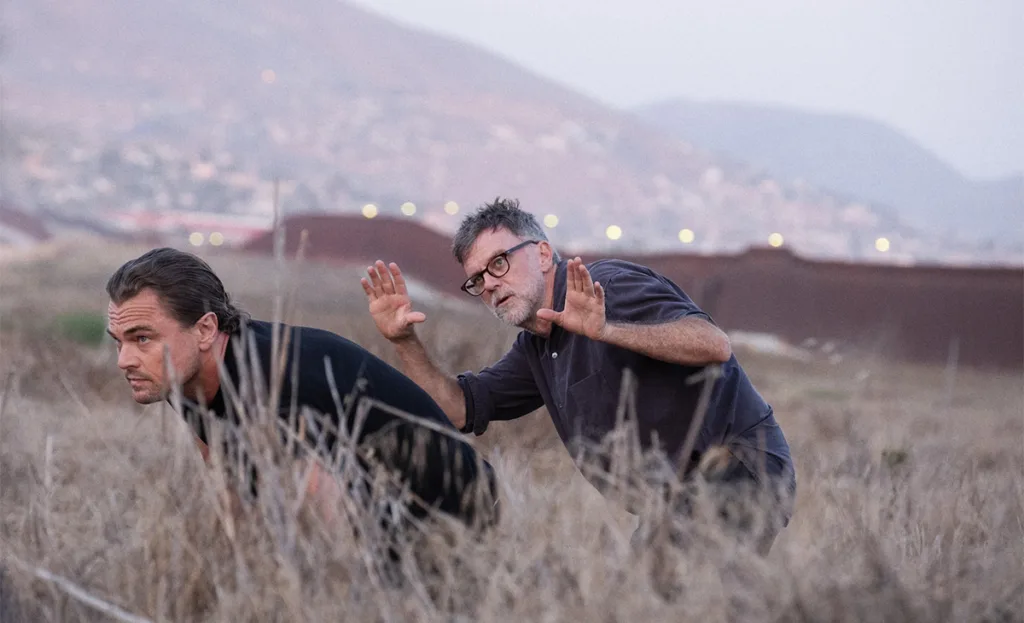
One Battle After Another is written and directed by Paul Thomas Anderson, and stars Leonardo DiCaprio, Sean Penn, Benicio del Toro, Regina Hall, Teyana Taylor, and Chase Infiniti. It follows an ex-revolutionary (DiCaprio) who must rescue his daughter (Infiniti) from a corrupt military official (Penn) amid a tumultuous political backdrop that sees California in the middle of a racially fuelled civil war.
The film is exceptionally well written, artfully directed, and features riveting performances from all of the cast, with DiCaprio and Chase Infiniti being particular standouts. It has been said of many films recently, but One Battle After Another truly is a movie that meets the political moment of our times. This is even more surprising to say given that the script is based on the postmodern novel “Vineland” written by Thomas Pynchon in 1990, a book that Anderson has wanted to adapt into a film for more than 30 years.
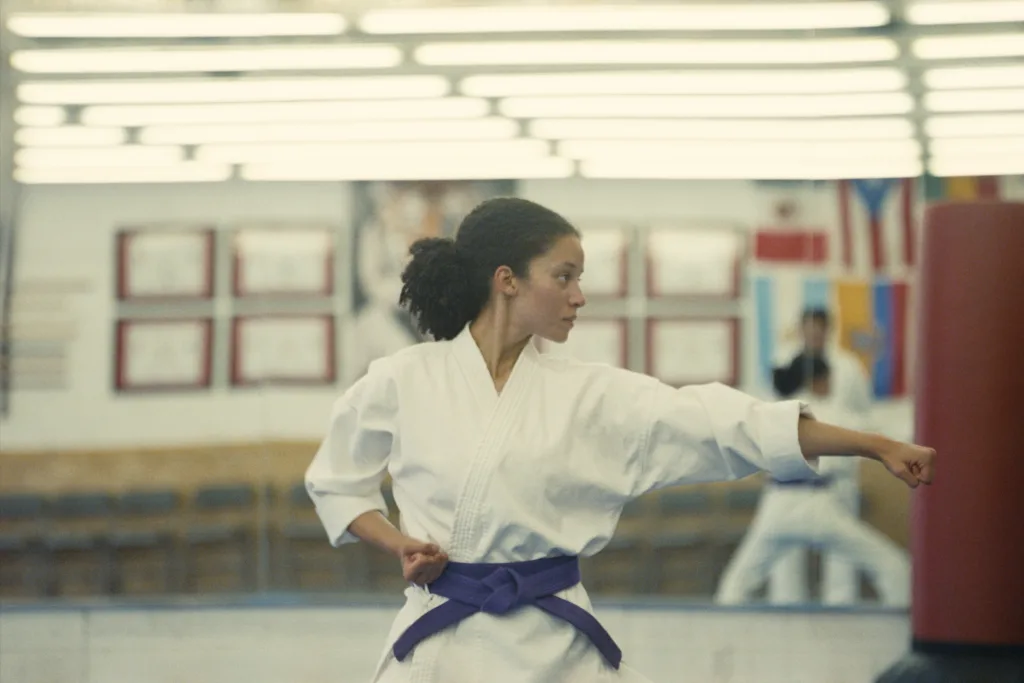
The story takes place over multiple decades, making it particularly difficult to structure as a film. Anderson however makes it seem effortless. After spending the opening 30 minutes establishing the history of the revolutionary group the French 75, where Di Caprio’s character Bob, met Teyana Taylor’s character Perfidia, the film jumps forward 15 years in time. In the present day we meet Di Caprio’s daughter, Willa (Chase Infiniti) and are thrown into the chaos of her life as a biracial child with ex-revolutionary parents, with a perfectly timed needle-drop of Steely Dan’s “Dirty Work”.
It’s here that you realise why Anderson took 30 years to adapt this story into a film. The script is efficiently paced, with a perfect mix of rich exposition that sets the context, and razor-sharp wit in its satirical critique of contemporary America. That is a result of decades of writing and rewriting to balance a plot-dense story with the levity required to make it relatable and lively enough to stay exciting.
This is only helped by the outstanding performances. Di Caprio’s anxious and overbearing ex-revolutionary father is brought to life by the fidgety, addictive personality of man whose spent decades on edge fearing that old enemies will someday find him. Benicio Del Toro provides the perfect foil to Di Caprio, exhibiting all the calmness and charisma that he wishes he had in moments of intense pressure.
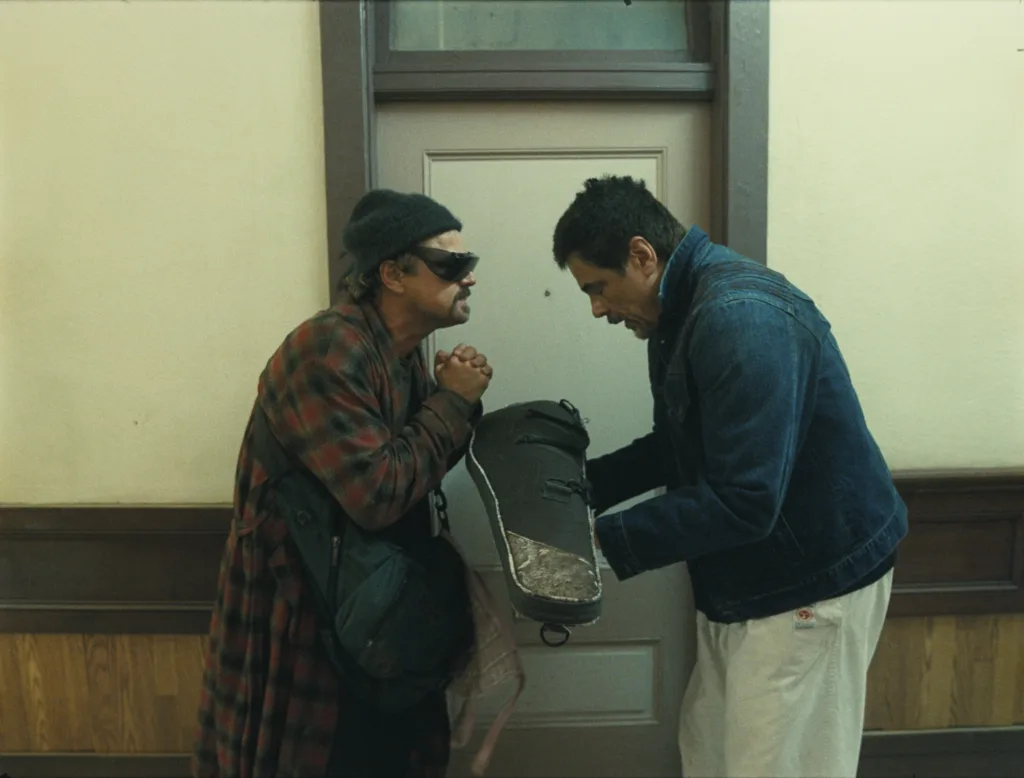
The dynamic they have allows them to play off eachother in ways that bring to life the disorderly reality involved in executing an underground revolution. For instance, scenes where Di Caprio argues on the phone with the persnickety phone operators of the revolutionary hotline that he calls, deliver all of Anderson’s witty satirical dialogue that criticises the overly delicate aspects of how modern progressive groups police each other’s language and actions. These make for genuinely laugh out loud moments.
Anderson depicts this contemporary civil unrset with an equal mix of vastness and warmth. Brilliant wide shots of the Los Angeles city area from a bird’s eye view overwhelm you with the concrete maze that the French 75 must navigate as they try to escape police cars that encircle them, while the frenzied piano score by Jonny Greenwood blares with intensity. This is equally matched with warm shots of the inner-city suburbs of El Paso, Texas that serve as the backdrop for Benicio Del Toro’s character Sensei’s secret underground apartment that shelters immigrants. Here, we get stunning tracking shots of a rooftop building chase across the warmly-lit streets (filmed in El Paso) with a group of Mexican American skateboarding teenagers helping coordinate Di Caprio’s character Bob’s escape from the authorities. Stunning, high contrast shots of them gliding across rooftops frame their silhouettes against the golden hour evening light of El Paso’s gritty streets.
Importantly, even at such a large scale, Anderson is able to fully capture the feeling of a modern American revolution specifically because he doesn’t limit himself to only the top-level elements. Instead, he spends much of his time peppering the film with the intimate, familial, street-level moments that make up a revolution. Quiet moments of panic like the scenes that unfold in the back of a Mexican-owned convenience store, with glaringly bright fluorescent lighting immerse the audience in all of the smaller pockets of what it would feel like to live through a real revolution.
Messy, unorganised, and makeshift, Anderson finds his revolution to be more believable when injected with all the humour and authenticity that’s achieved by capturing these moments with a naturalistic directing style that feels loose and unpredictable. As Benicio Del Toro’s character shuffles through hordes of inattentive children living in his shelter apartments, they quickly shift from focused on their phones to activated into their rehearsed evacuation routine. You’re swept up by the erratic score, as the fast-paced camera movements use tracking shots to take you down the narrow hallways of this space while innocent people try to escape the police chasing them down. This combination of intricately designed music, stylistic choices, and visual pace, makes for the most convincing depiction of a modern American revolution put to film in recent decades.
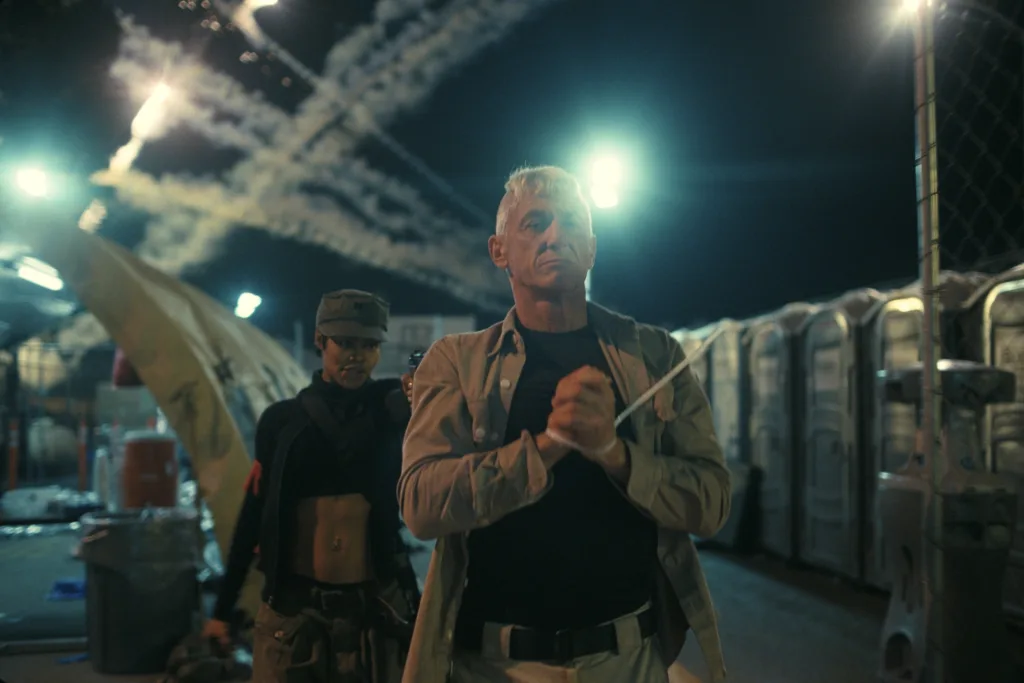
Amid all of the urban chaos that he depicts, Anderson turns his attention to a desolate desert landscape for the third act. It’s here where the film elevates itself from a clever satirical thriller to a true modern American epic. It does this by capturing the immense beauty of the Californian landscape, shot on location in the San Diego desert, across Borrego Springs and Otay Mesa, just north of the U.S.–Mexico border. Anderson shoots on real Vista Vision 70mm film, capturing extraordinary wide shots of these richly textured yellow and gold landscapes, filled with all the grain and nostalgic qualities that beautifully render these as icons of Americana.
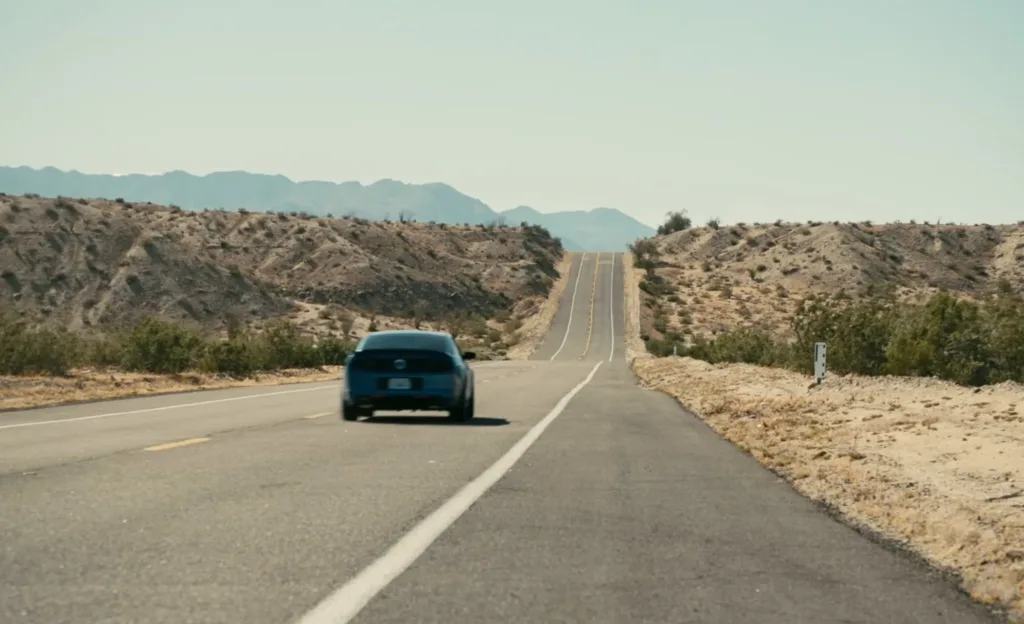
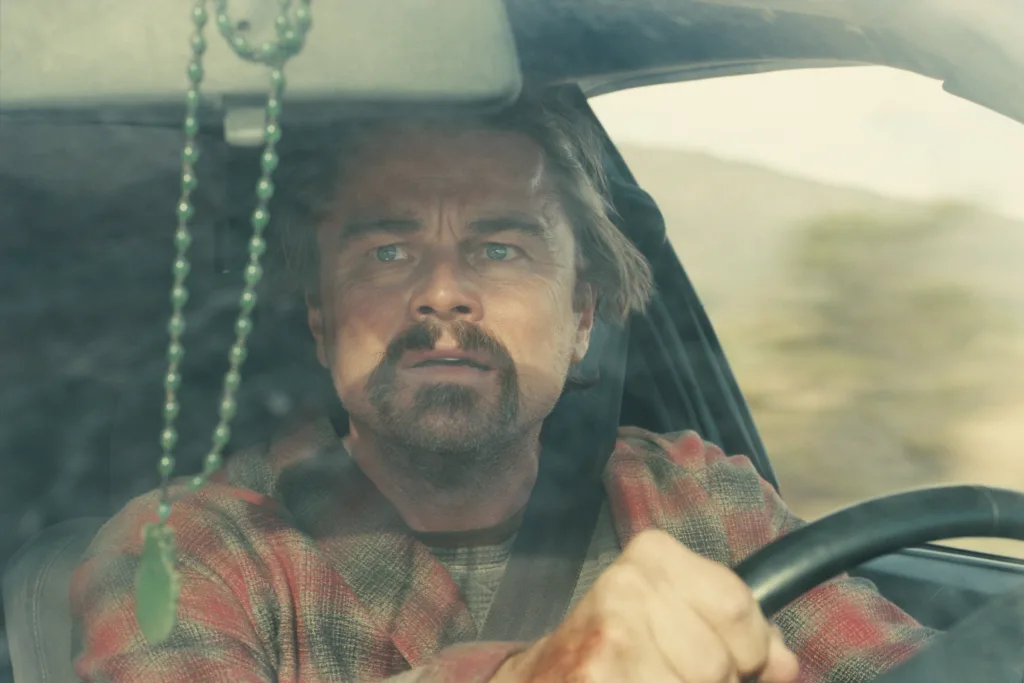
It is here where Anderson’s thrilling final car chase unfolds, with the “River of Hills” scene that location scout Florencia Martin found to be perfect for the final confontation. As each car travels up and down the hills. the audience cannot see what is over the horizon, just as the driver can’t see it either. By keeping the camera perfectly still, Anderson forces you to sit with the same uncertainty that Chase Infiniti and DiCaprio’s characters have, not knowing what is coming next. The effect is that even though the car chase uses stable shots and a medium pace, this extended sequence is completely breathless. The payoff then is all the more satisfying when the perfect mix of music and dramatic irony allows Willa (Infiniti’s character) to be reunited with her father thanks to the melodic sounds that her safety device emits to sync with his. It’s moments like this when all of Anderson’s immaculate work comes together in a crescendo of cinematic payoff that makes the experience of watching films like this one so special.
One Battle After Another is sharply satirical, epic and sprawling in scale, and captures all the messiness and humour of a modern American revolution with beauty, honesty and wit.
If you enjoyed our One Battle After Another review, check out more from Screen Brief below.
Read more Movie Reviews from Screen Brief.